
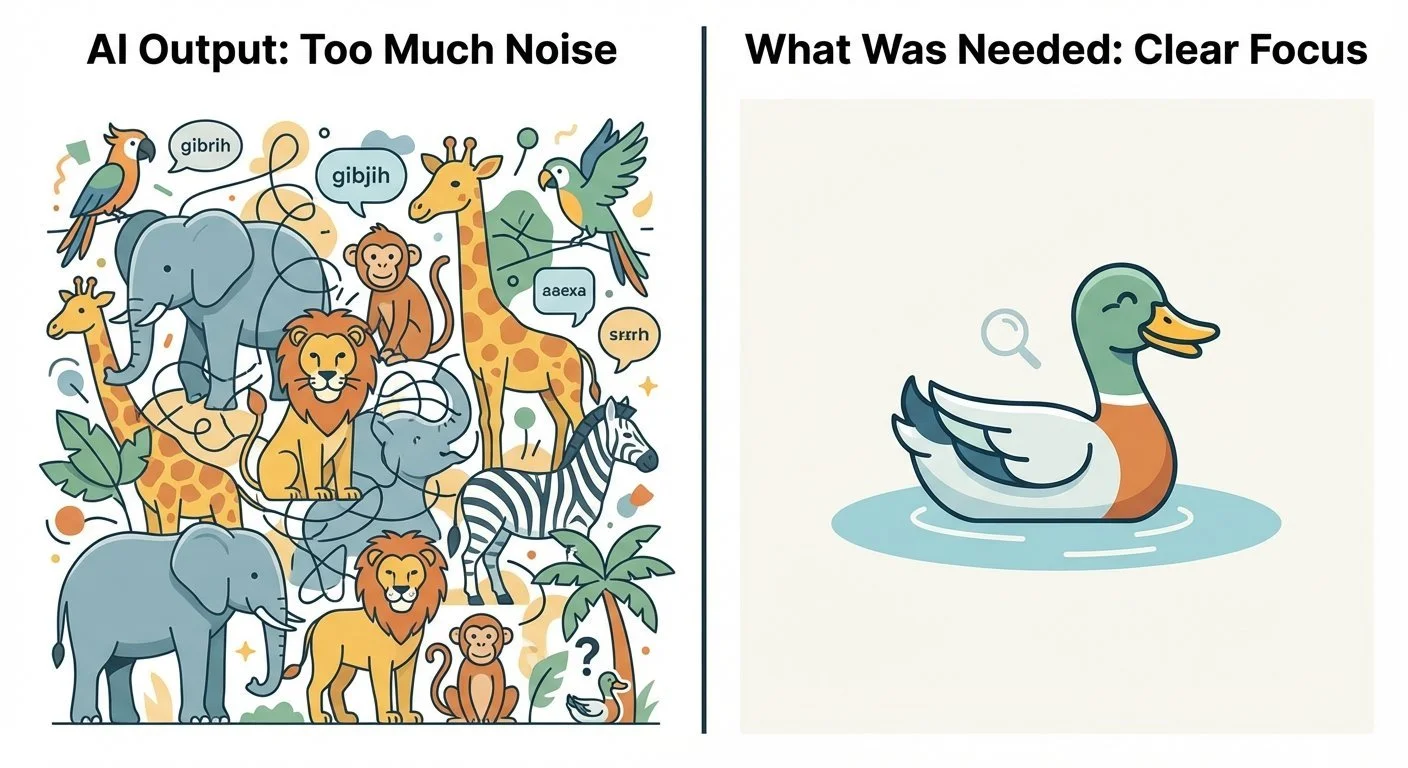
The Bart Test - Part 3: The Zoo-Not-Duck Problem
When I asked what made the AI output feel unnatural, Teen #1 said:
> "Just didn't seem like very effective communication. It's like if you are trying to paint a picture of a duck and you paint a picture of a zoo with a tiny duck exhibit in the corner. Too much noise."
This metaphor captured the core problem.
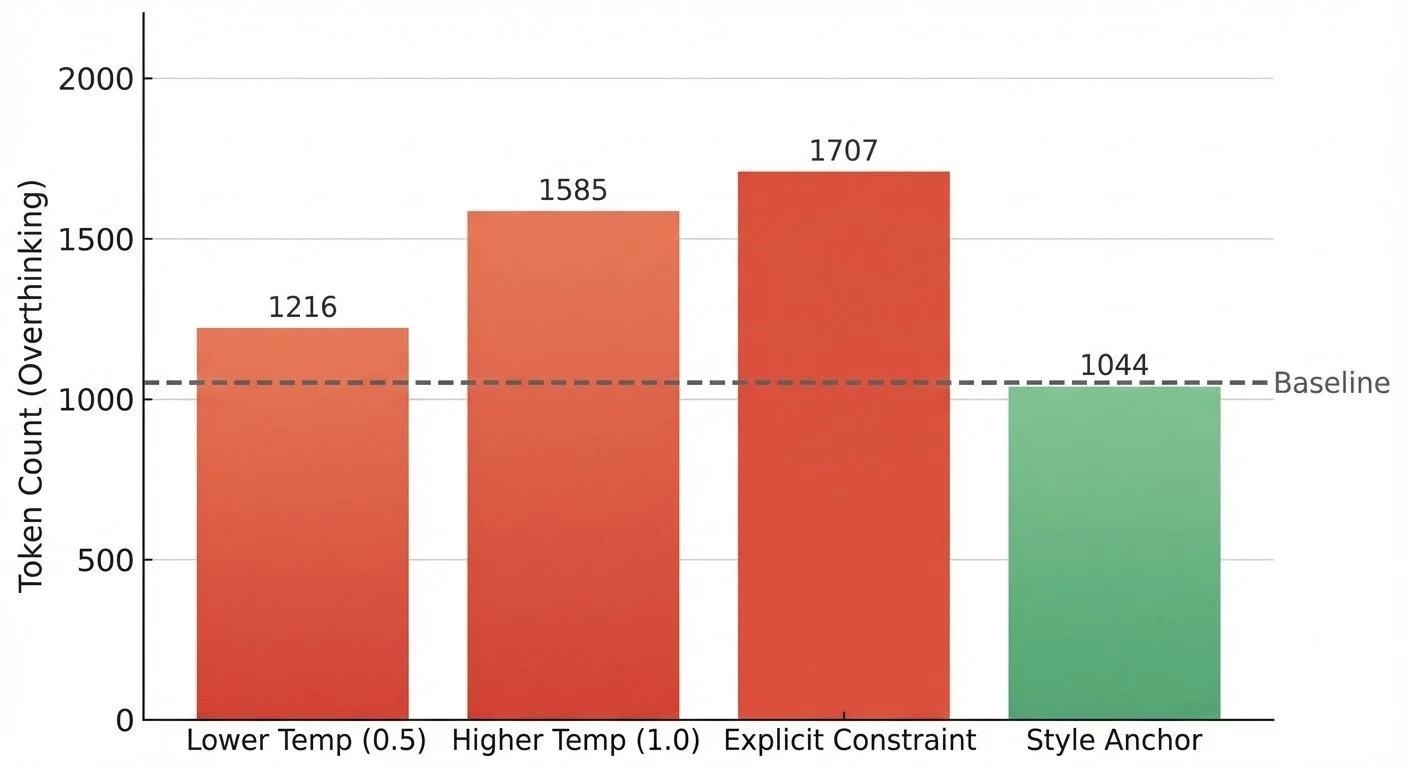
The Bart Test - Part 2: Testing the Overthinking Hypothesis
After seeing OLMo 3 overthink Gen-Alpha slang (scores of 4-5/10), I wondered: can I tune this to reduce over-thinking? If the model is trying too hard, maybe I could adjust parameters or prompts to make it more natural.
Spoiler: Both directions made it worse.
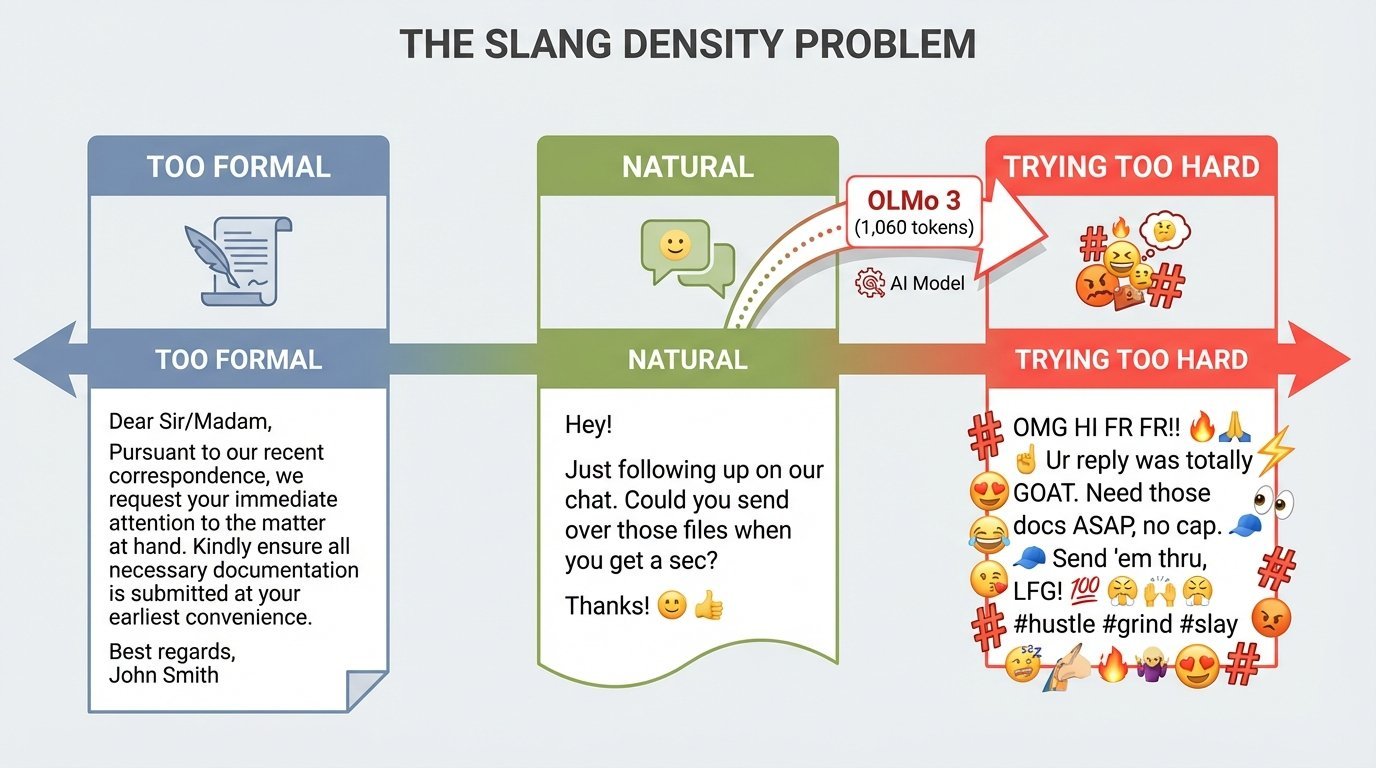
The Bart Test - Part 1: When AI Does Its Homework Too Well
I asked my teenagers to judge an AI's attempt at Gen-Alpha slang.
Teen #1: "It's definitely AI... a little too much." Score: 4/10.
Teen #2: "It sounds like my ELA project where we had to use as much slang as possible." Score: 6/10 (if a teen wrote it), 2/10 (if an adult did).
The AI did its homework. That's the problem.
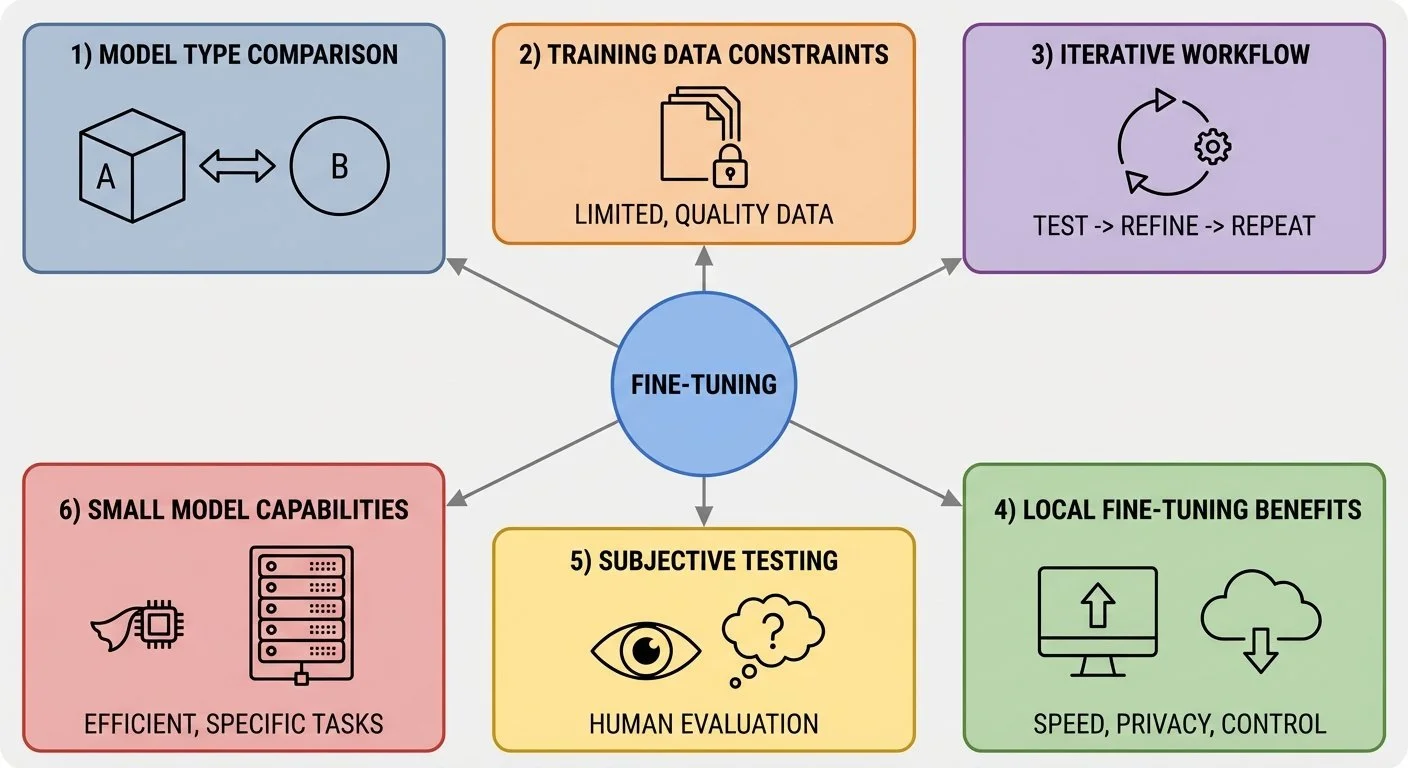
Fine-Tuning Gemma for Personality - Part 8: Lessons Learned
Eight posts about teaching an AI to talk like a cartoon dog. Here's what actually mattered.
Fine-Tuning Gemma for Personality - Part 1: Why Fine-Tune a 6-Year-Old?
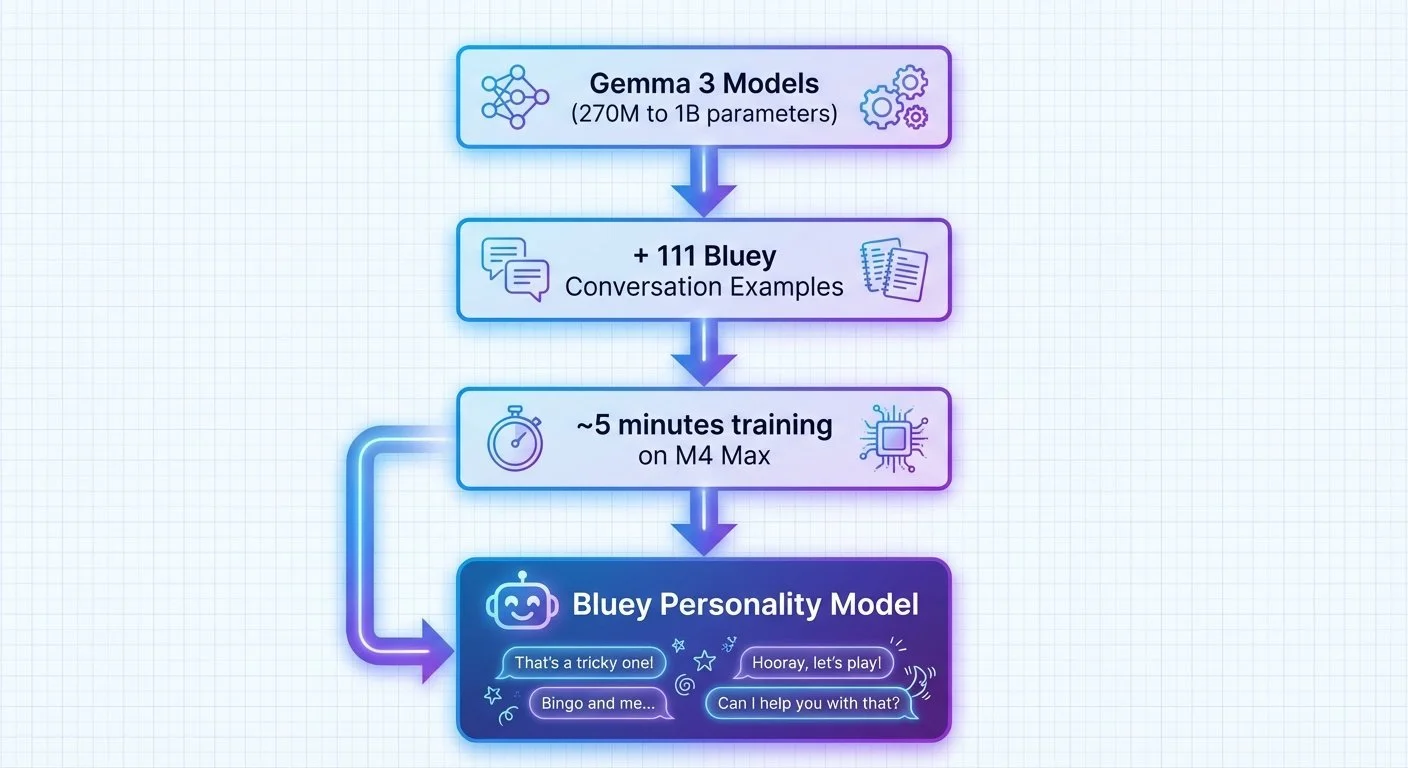
I taught an AI to talk like Bluey Heeler from the kids' show. Not through prompt engineering or RAG—through fine-tuning a small language model on 111 conversation examples. Five minutes of training on my MacBook. The model learned to mimic her speech patterns.
Building an Agentic Personal Trainer - Part 9: Lessons Learned
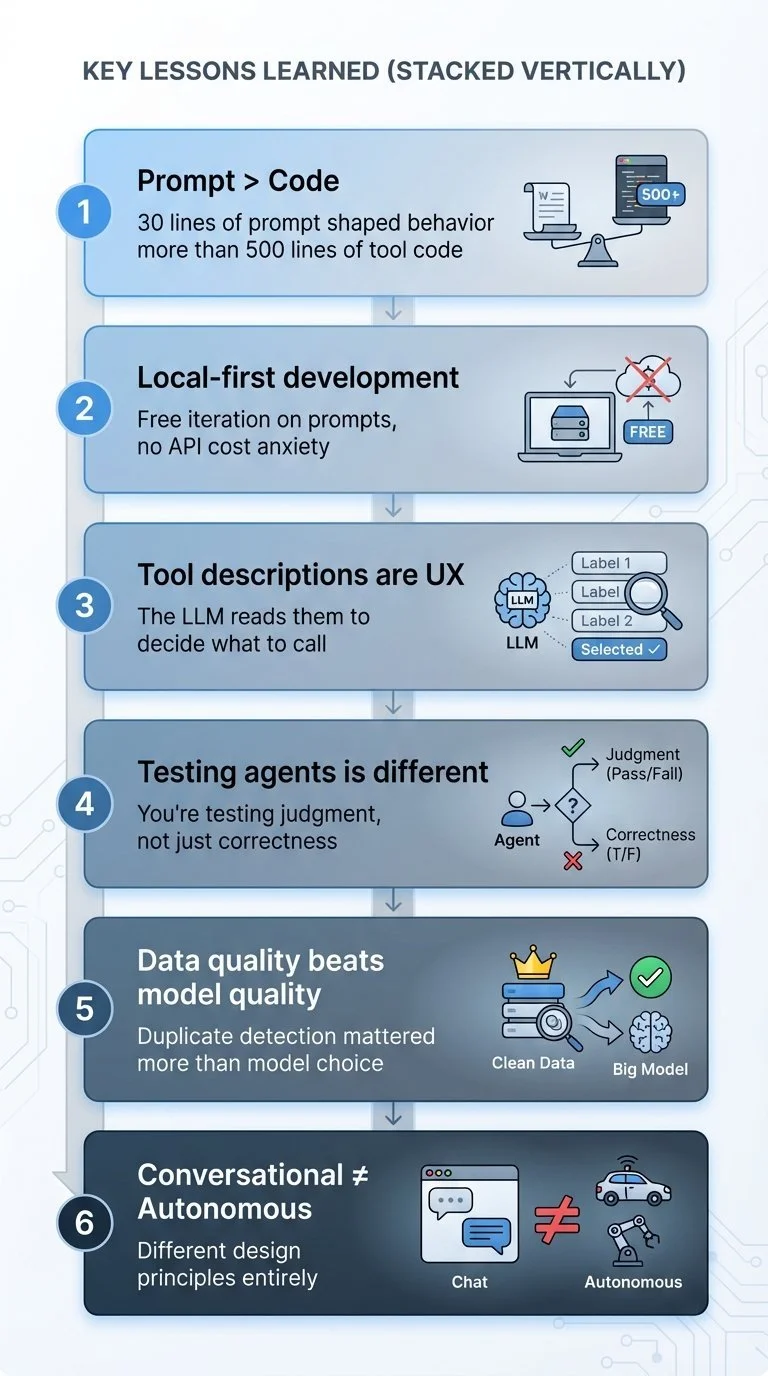
Nine posts later, what actually worked? What would I do differently? Here's my retrospective.
Building an Agentic Personal Trainer - Part 3: The System Prompt
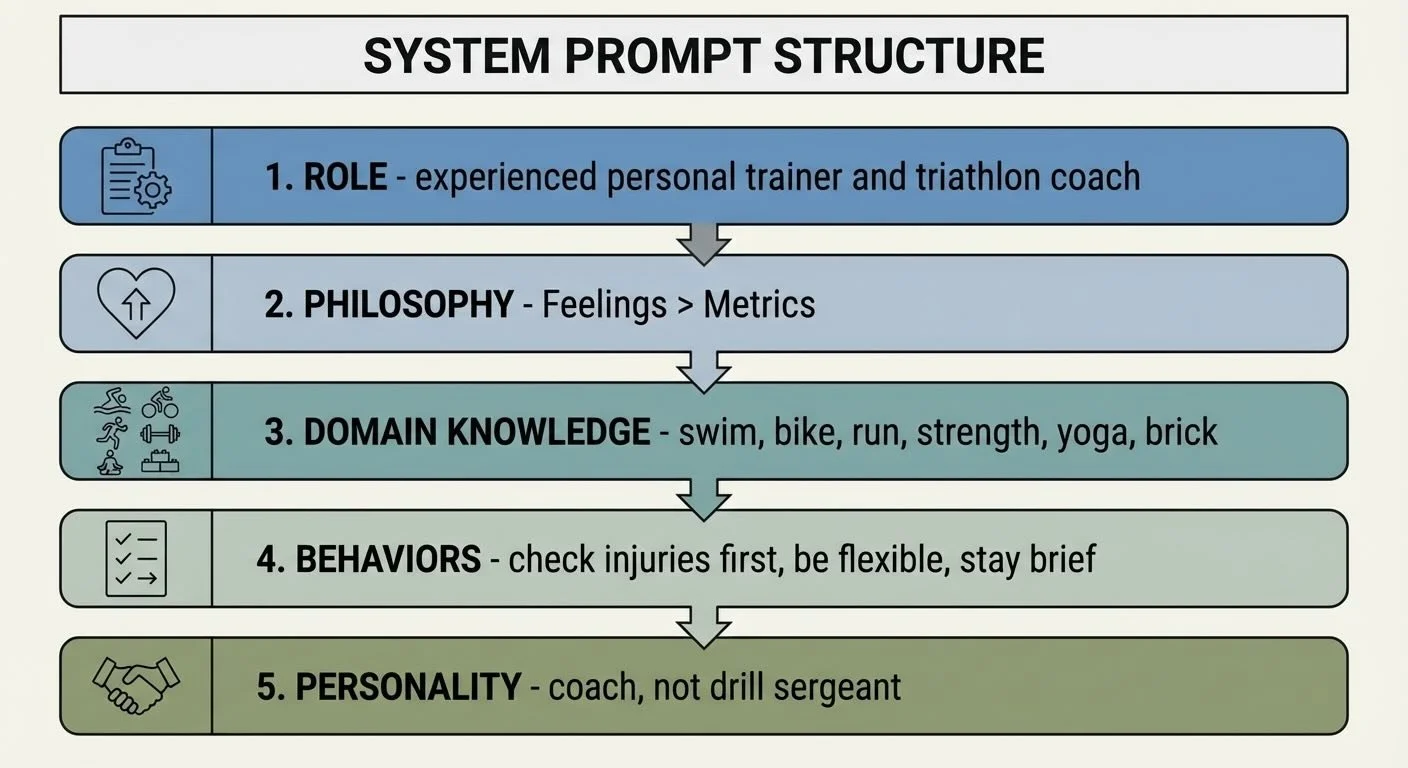
Tools give the agent capabilities but the system prompt gives the agent its personality. Getting the tone right—in this case "coach, not drill sergeant"—requires iteration, opinion, and intuition, not just correct syntax.
Building an Agentic Personal Trainer - Part 1: Architecture and Philosophy
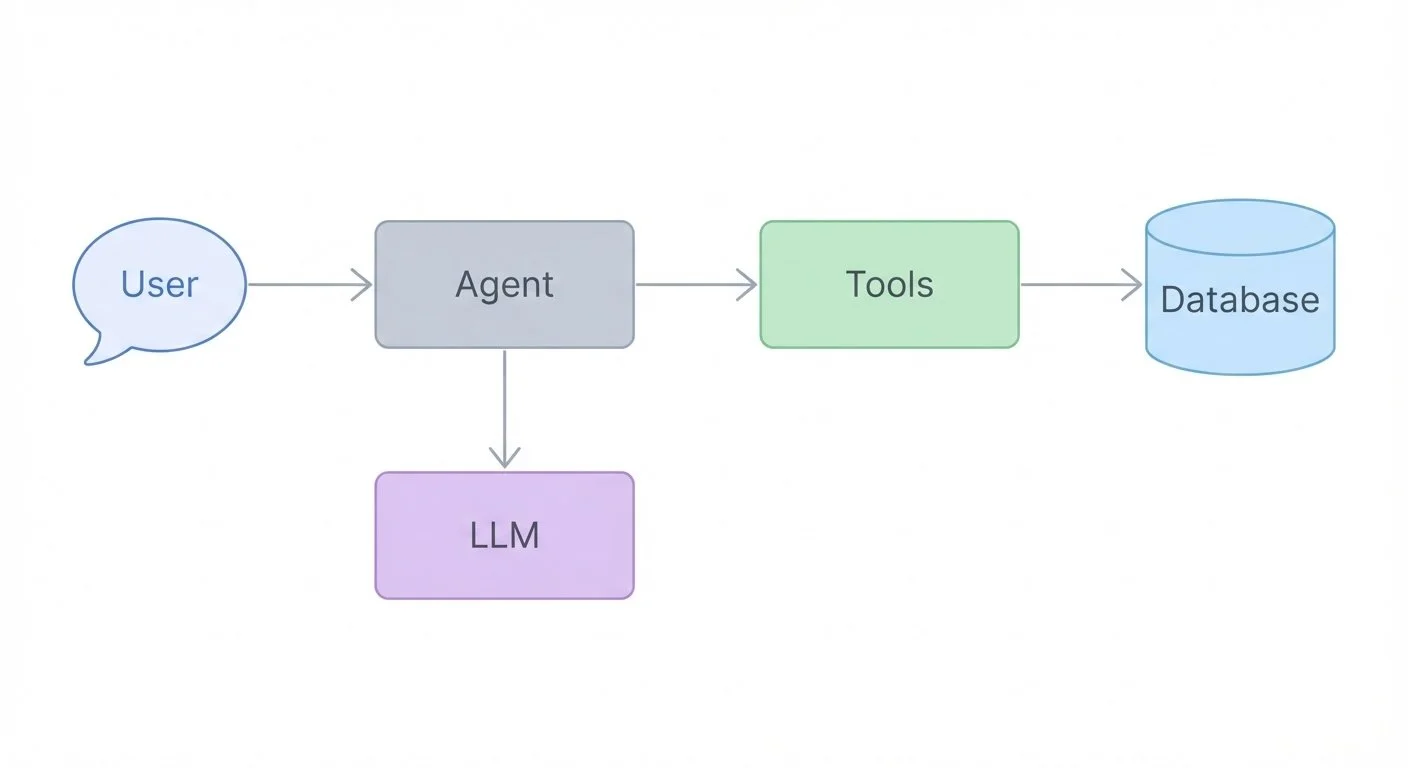
After building an [autonomous stock trading system](https://www.mosaicmeshai.com/blog/building-an-mcp-agentic-stock-trading-system-part-1-the-architecture) with custom MCP servers, I wanted something different: a conversational AI that collaborates rather than executes. Something that asks "how are you feeling?" before suggesting a workout.
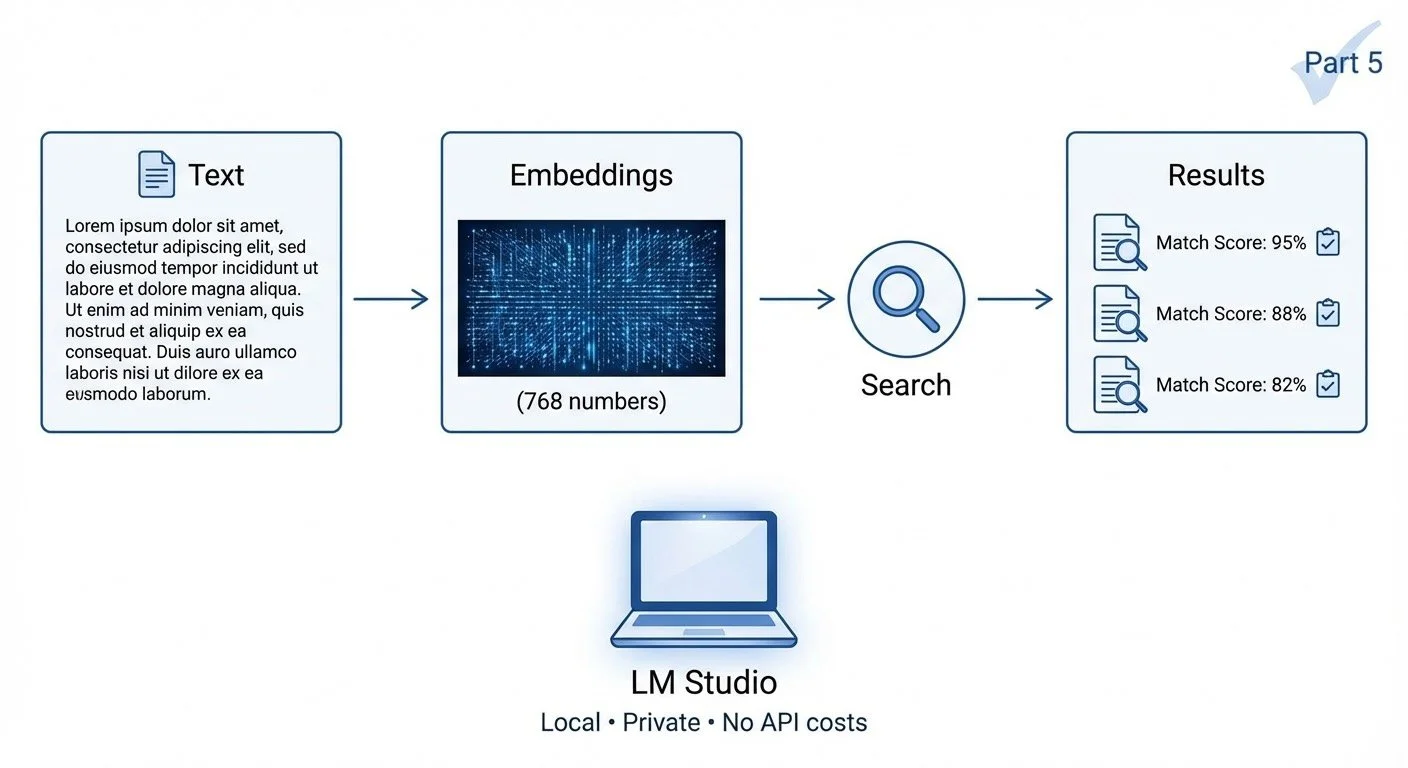
Building a Local Semantic Search Engine - Part 5: Learning by Building
Building a semantic search engine taught me more about embeddings than reading about them ever could. The real value wasn't the tool—it was understanding what those 768 numbers actually mean.
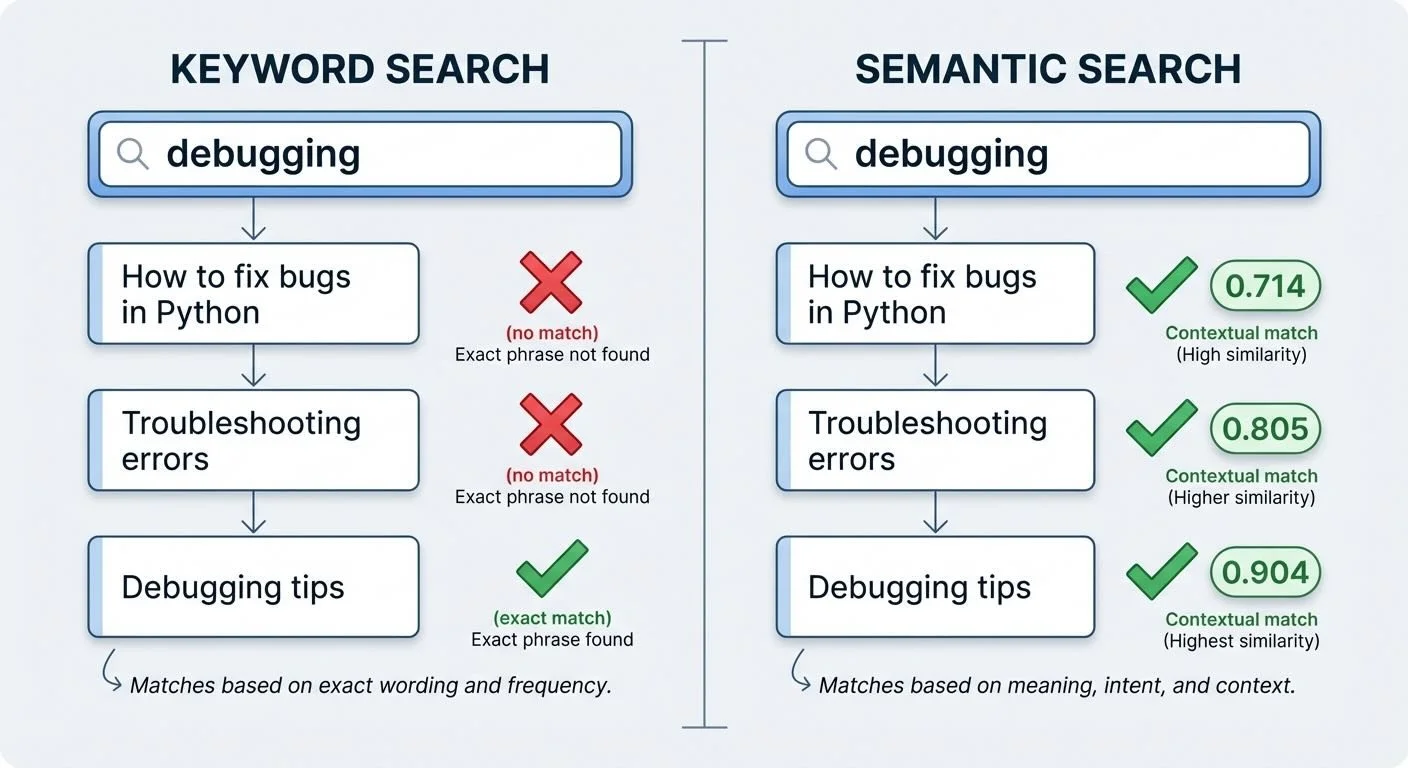
Building a Local Semantic Search Engine - Part 2: From Keywords to Meaning
Traditional search fails when you don't remember the exact words. Searching "debugging" won't find your notes about "fixing bugs." Semantic search finds them anyway—because it searches by meaning, not keywords.
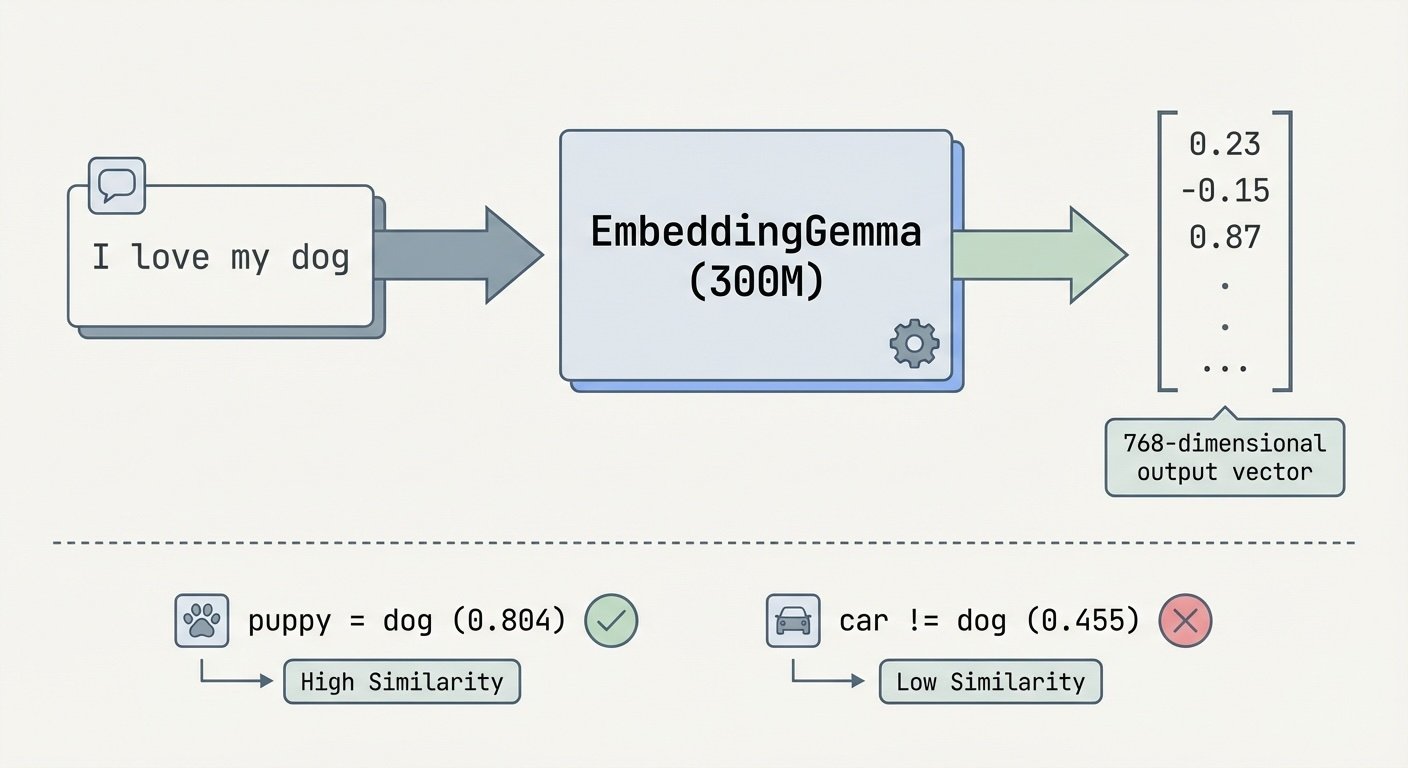
Building a Local Semantic Search Engine - Part 1: What Are Embeddings?
"I love playing with my dog" and "My puppy is so playful and fun" are 80.4% similar. Compare that to "Cars are expensive to maintain"—only 45.5% similar. How does a computer know that? Embeddings—and I wanted to run them entirely on my laptop.

Building an MCP Agentic Stock Trading System - Part 7: MCP Experimentation Lessons
After building three AI trading agents with MCP, here's what I'd do differently.
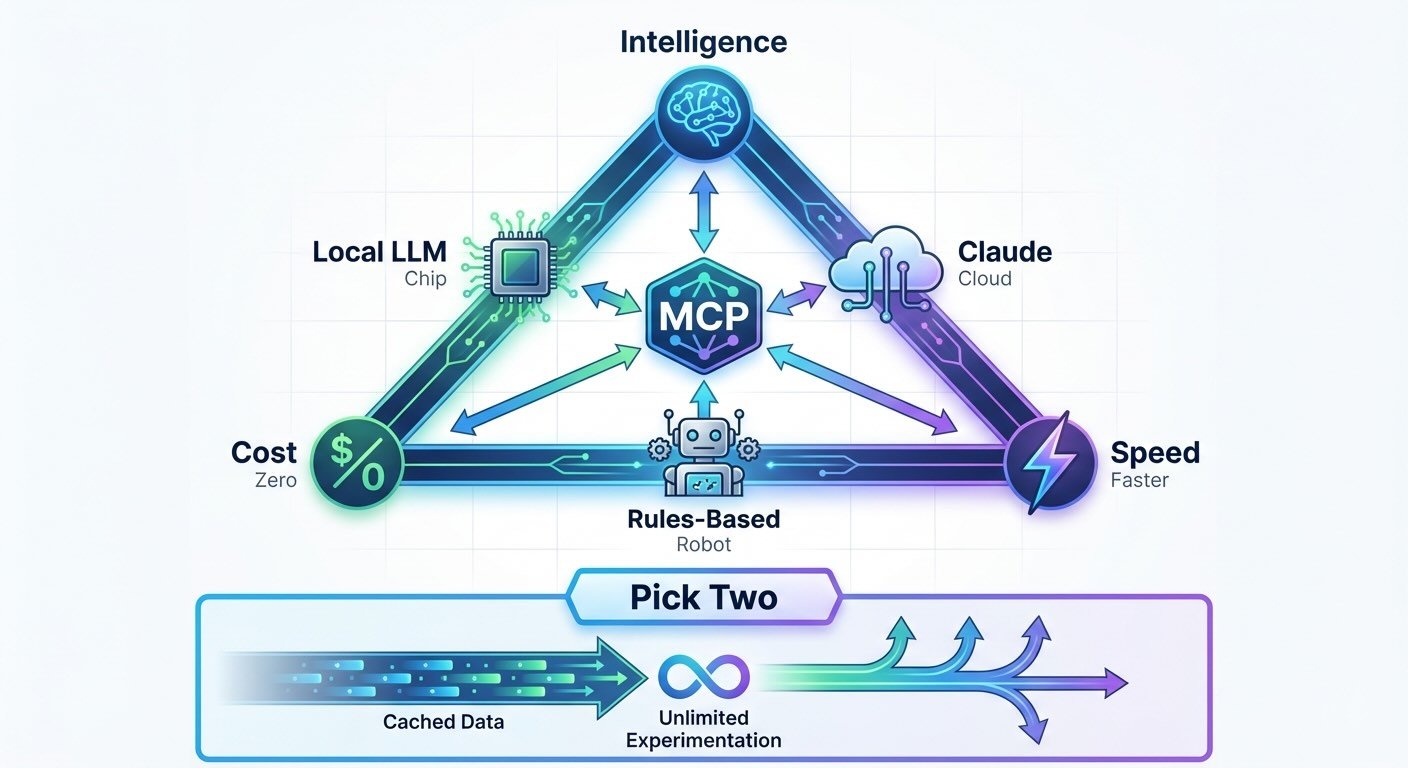
Building an MCP Agentic Stock Trading System - Part 6: Cloud vs Local vs Rules
Building with three agent types taught me: you can optimize for speed, cost, or intelligence—pick two.
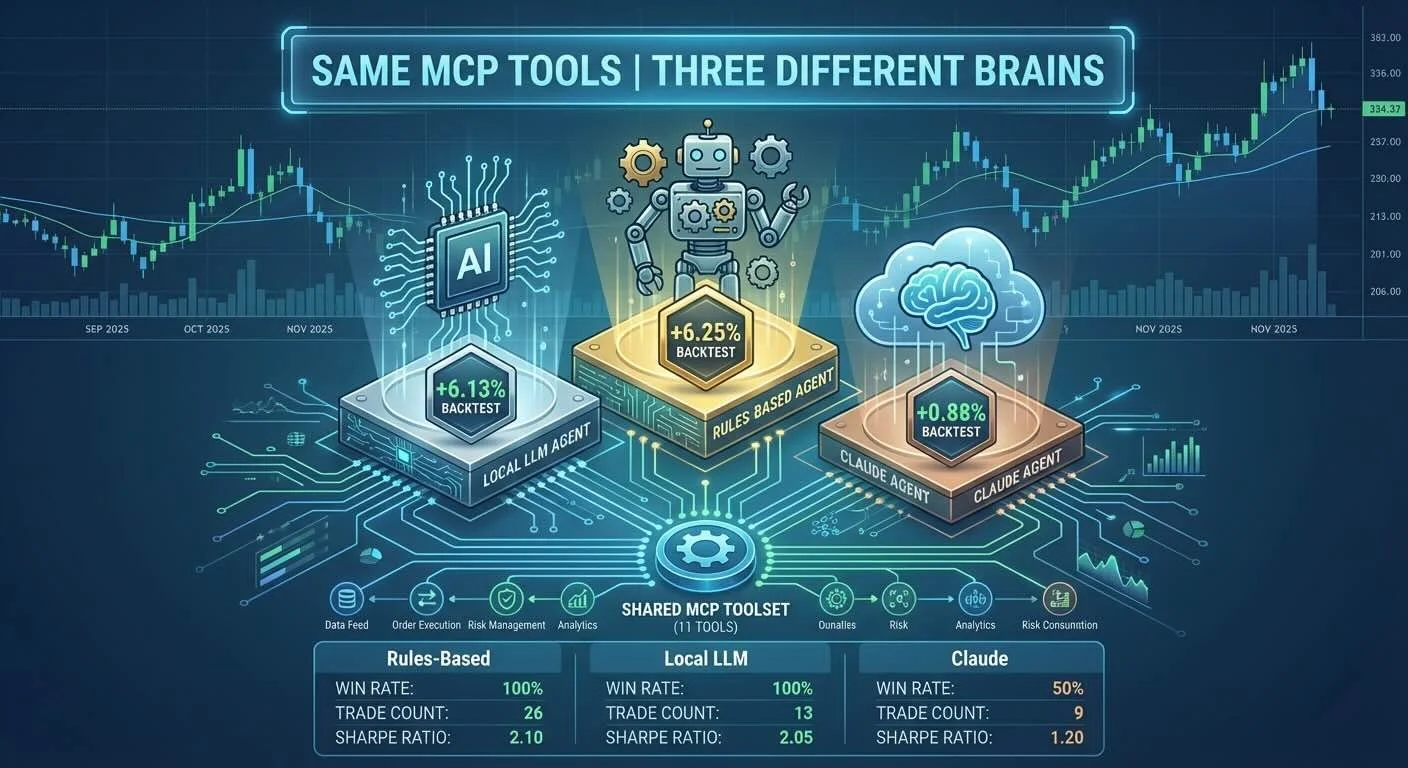
Building an MCP Agentic Stock Trading System - Part 5: Backtesting All Three Agents
I ran all three agents over 2 months of real market data to see how MCP handles different "brains" with the same tools. The results surprised me—but not in the way I expected.

Building an MCP Agentic Stock Trading System - Part 4: When Agents Disagree
Three AI agents analyze Apple stock on the same day. Two reach the same conclusion through reasoning, one through arithmetic. What does this reveal about AI decision-making?

Building an MCP Agentic Stock Trading System - Part 3: The Agentic Loop
The agentic loop is where LLMs become active problem-solvers instead of passive responders. The LLM doesn't just answer once—it iteratively calls tools, analyzes results, and decides what to check next. My trading agent uses this to analyze stocks: fetch data, calculate indicators, check trends, then make a decision.
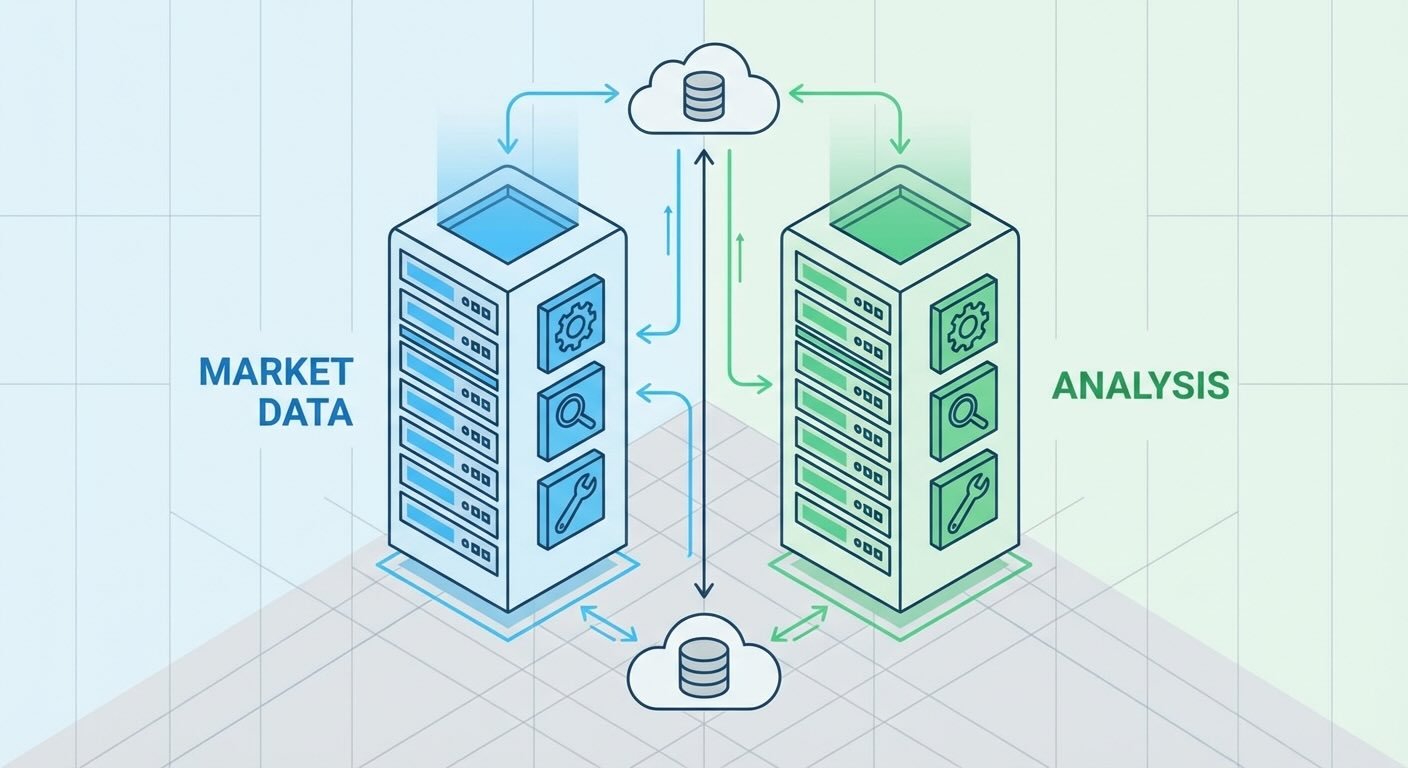
Building an MCP Agentic Stock Trading System - Part 2: The MCP Servers and Tools
MCP servers are like USB hubs for AI—they provide standardized tools that any agent can plug into. My trading system has two: one fetches market data, the other calculates technical indicators. Write them once, use them with Claude, local LLMs, or even traditional code.
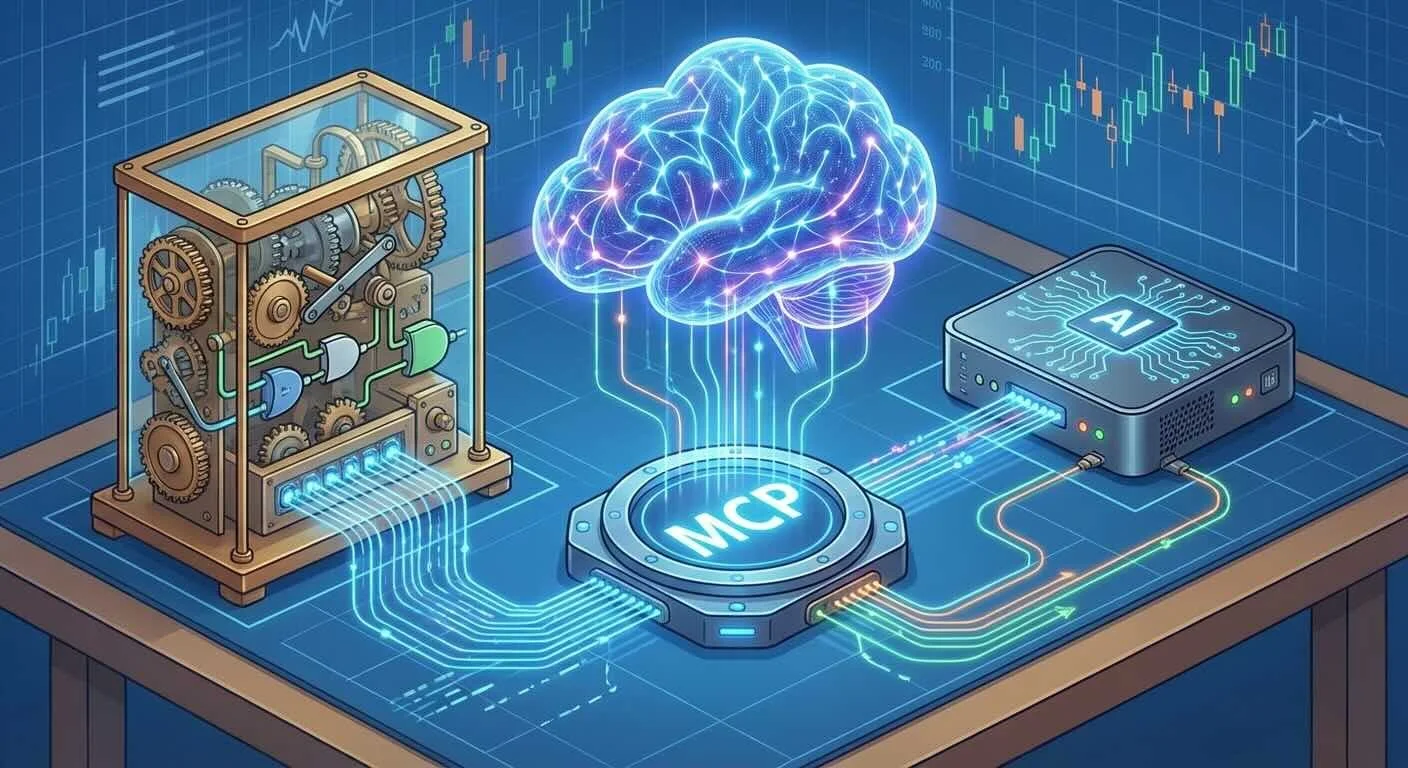
Building an MCP Agentic Stock Trading System - Part 1: The Architecture
I wanted to experiment with Model Context Protocol (MCP) and compare local LLMs against API-based ones. So I built a stock paper-trading system with three brains: a rules-based trader, Claude API, and a local Llama model in LM Studio. Same market data, different decision-making approaches.