
Building an MCP Agentic Stock Trading System - Part 2: The MCP Servers and Tools
This is Part 2 of a series on building an MCP trading system. Read Part 1 for the overall architecture and three-agent setup.
MCP servers are like USB hubs for AI—they provide standardized tools that any agent can plug into. My trading system has two: one fetches market data, the other calculates technical indicators. Write them once, use them with Claude, local LLMs, or even traditional code.
I built two MCP servers as separate Node.js processes:
┌──────────────────────────────────────────────────────────────┐
│                    Market Data Server                        │
├──────────────────────────────────────────────────────────────┤
│ • get_current_price      Real-time stock prices              │
│ • get_historical_prices  Daily data (100 days or 20+ years)  │
│ • get_intraday_prices    Minute-level data                   │
│ • get_quote              Detailed quote info                 │
│ • search_symbols         Find stocks by company name         │
└──────────────────────────────────────────────────────────────┘

┌──────────────────────────────────────────────────────────────┐
│                     Analysis Server                          │
├──────────────────────────────────────────────────────────────┤
│ • calculate_sma          Simple Moving Average               │
│ • calculate_ema          Exponential Moving Average          │
│ • calculate_rsi          Relative Strength Index             │
│ • calculate_macd         Trend momentum indicator            │
│ • calculate_bollinger    Volatility bands                    │
│ • detect_trend           Uptrend/downtrend/sideways          │
│ • generate_signals       Buy/sell/hold recommendations       │
└──────────────────────────────────────────────────────────────┘
Two MCP servers providing 11 tools to all trading agents
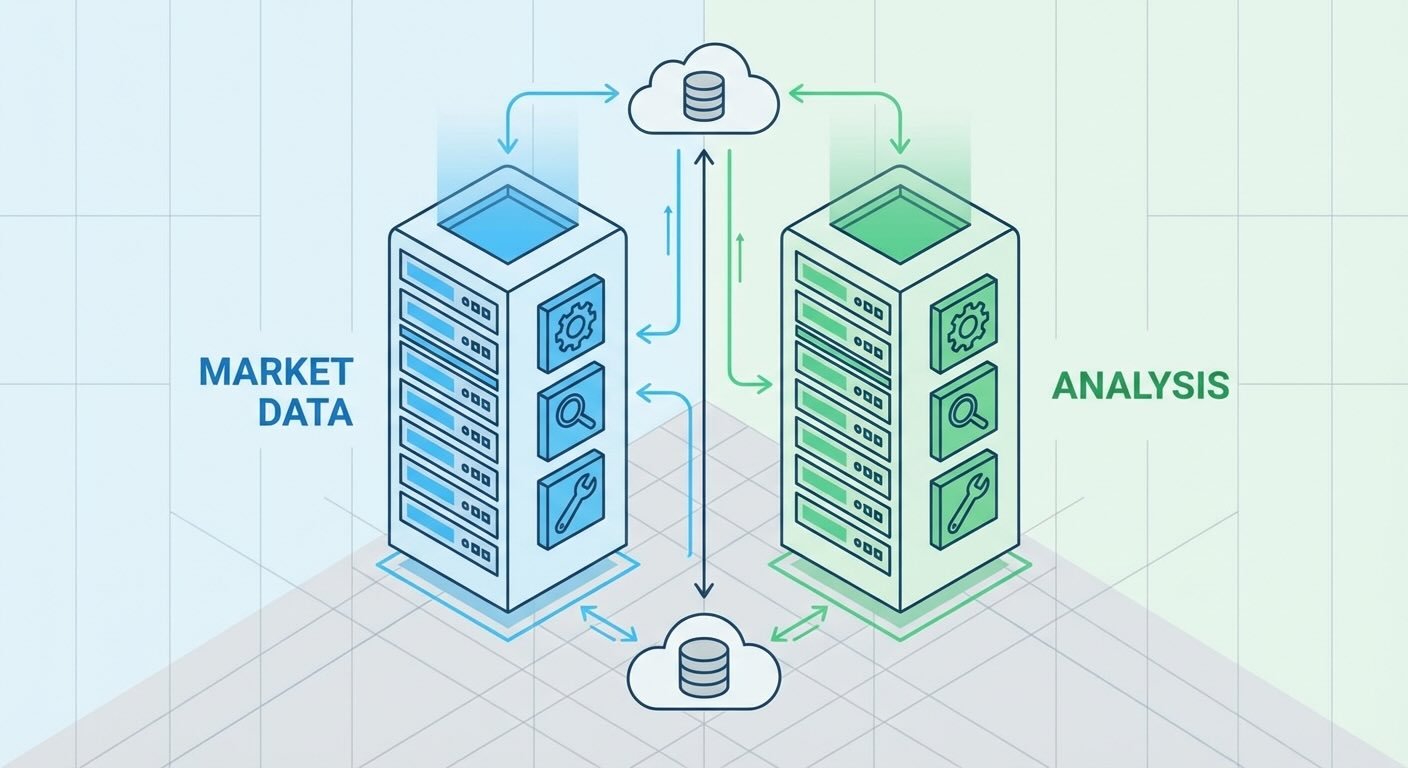
Two MCP Servers
The Market Data Server (tool definitions) and Analysis Server (tool definitions) each define their tools using JSON schemas, then handle requests via stdio. The agents spawn these as child processes and communicate through standard input/output. No HTTP, no sockets—just pipes.
Here's what a tool definition looks like (analysis-server.js:75-93):
{
  name: 'calculate_rsi',
  description: 'Calculate Relative Strength Index',
  inputSchema: {
    type: 'object',
    properties: {
      prices: {
        type: 'array',
        description: 'Array of closing prices',
        items: { type: 'number' }
      },
      period: {
        type: 'number',
        description: 'Period for RSI (typically 14)',
        default: 14
      }
    },
    required: ['prices']
  }
}
When an agent (rule-based, Claude, or local LLM) needs RSI, it calls this tool with an array of prices. The MCP server calculates and returns the result (implementation here). Same tool, three different consumers.
This separation is powerful. I can add new tools to the MCP servers, and all three agents instantly get access. No copying code, no duplicating logic. The servers are dumb—they just do math and fetch data. The intelligence lives in how the agents use these tools.
Next up: showing how the agents actually call these tools and make decisions.
agentic-stock-trader - View on GitHub
This post is part of my daily AI journey blog at Mosaic Mesh AI. Building in public, learning in public, sharing the messy middle of AI development.