
Building an Agentic Personal Trainer - Part 1: Architecture and Philosophy
After building an autonomous stock trading prototype with custom MCP servers, I wanted something different: a conversational AI that collaborates rather than executes. Something that asks "how are you feeling?" before suggesting a workout.
I've built a prototype personal trainer for triathletes using LangChain's agent executor pattern. The system connects a user to an agent that has access to tools and a database, with the LLM (running locally via LM Studio or in the cloud) powering the reasoning.
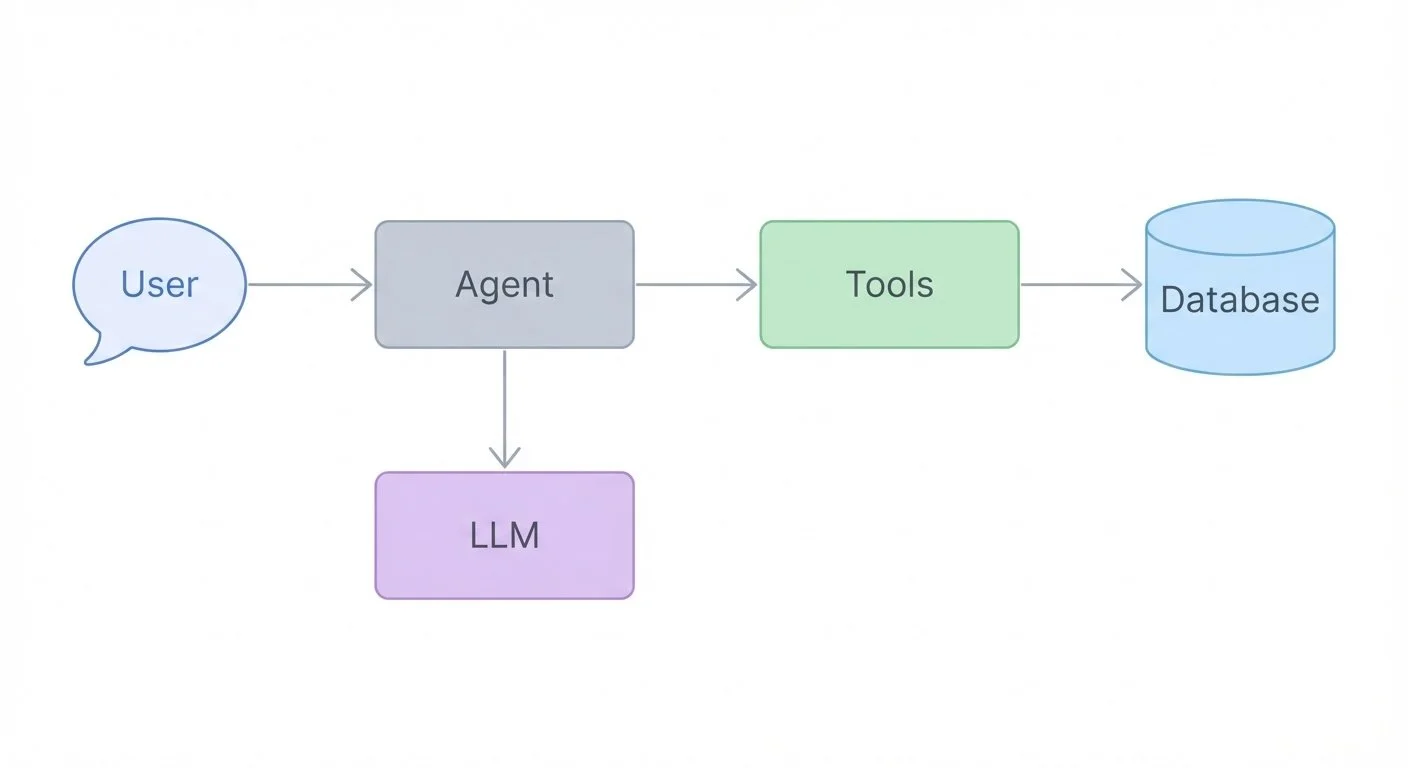
Architecture overview: LangChain agent executor connecting user, tools, database, and LLM
The core philosophy lives in the system prompt (trainer-agent.js:84-112). Here's a condensed version:
const agent = await initializeAgentExecutorWithOptions(tools, llm, {
  agentType: "chat-conversational-react-description",
  agentArgs: {
    prefix: `You are an experienced personal trainer...

    Your coaching philosophy:
    - You focus on how the athlete is FEELING, not just data
    - You suggest workouts, you don't prescribe rigid plans
    - Be flexible - easily reschedule when life happens

    You're a coach, not a drill sergeant.`
  }
});
"Feelings > Metrics" became my design mantra. The stock trader optimized returns. This system optimizes for sustainability and enjoyment.
Eight tools handle the mechanics: checking injuries, suggesting workouts, managing schedules. But the prompt shapes the personality. For example, the prompt tells the LLM to check your injury history and ask about that tweaky knee before recommending intervals.
The key architectural decisions:
- LangChain agent executor with
chat-conversational-react-descriptionfor tool-calling compatibility with local LLMs - SQLite database for persistence across sessions (conversations, workouts, injuries, preferences)
- Factory pattern for LLM provider switching (local LM Studio, Gemini, Claude-ready)
- Tool-based extensibility - add new capabilities without changing core agent logic
The biggest shift from autonomous agents to conversational ones: you're designing a relationship, not an optimizer. The prompt isn't just instructions—it's character development.
When I built the stock trader, success meant maximizing returns. Here, success means the athlete actually enjoys training, stays injury-free, and keeps coming back to the agent for advice. That philosophical difference influenced how I approached the project.
Next up: the tool system that makes the agent actually useful.
Part 1 of 9 in the Agentic Personal Trainer series.
agentic-personal-trainer - View on GitHub
This post is part of my daily AI journey blog at Mosaic Mesh AI. Building in public, learning in public, sharing the messy middle of AI development.